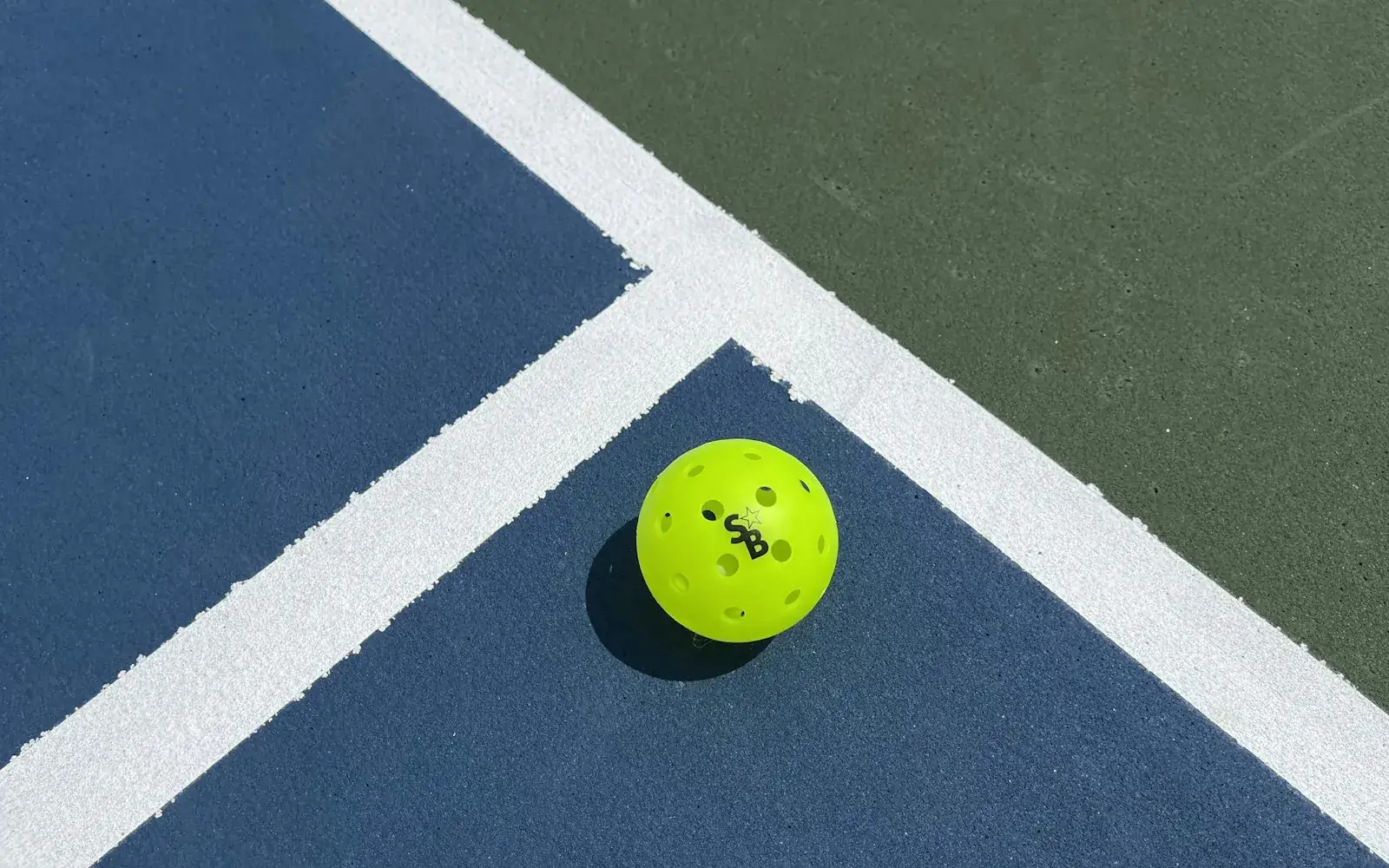
What the dink is for: once both teams are at the net, whoever hits up first usually loses — a ball that rises gets attacked. The dink is a soft shot that lands in the opponent's kitchen and stays low, so they cannot attack it either. Dinking is a patience contest: you trade soft shots, waiting for the other side to make the mistake of popping one up.
Cross-court is the default
Dink cross-court rather than straight ahead whenever you can. Three reasons: the diagonal is longer so you have more margin, the net is two inches lower in the middle, and a cross-court dink pulls your opponent wide and opens the middle for your next ball. Straight-ahead dinks are fine as a change-up, but they are lower-percentage.
Where to aim
- At the feet. A ball at the shoelaces forces a low, awkward, upward reply.
- At the sideline hip. The hardest spot to move away from and still control.
- Occasionally right at them. A dink into the body jams the paddle and produces pop-ups.
Reading the pop-up
You can see it coming: an opponent stretched wide, paddle face opening up, contact below the net tape, or footwork that has them leaning back. When you see any of those, get your paddle up and ready to speed it up — the next ball is likely to sit up.
When to attack
Only speed up a ball that is above net height at your contact point. Attacking a low ball means hitting up, which just hands your opponent an easy counter-attack. The discipline to keep dinking a low ball — even ten, fifteen in a row — is what separates 3.5 players from 4.0s. See the ratings guide.
Drilling it
Cross-court dinks off a ball machine, forehand corner then backhand, aiming for long unbroken strings. Soft hands, paddle out front, push from the shoulder.
Put it into practice on court.
Book a Court