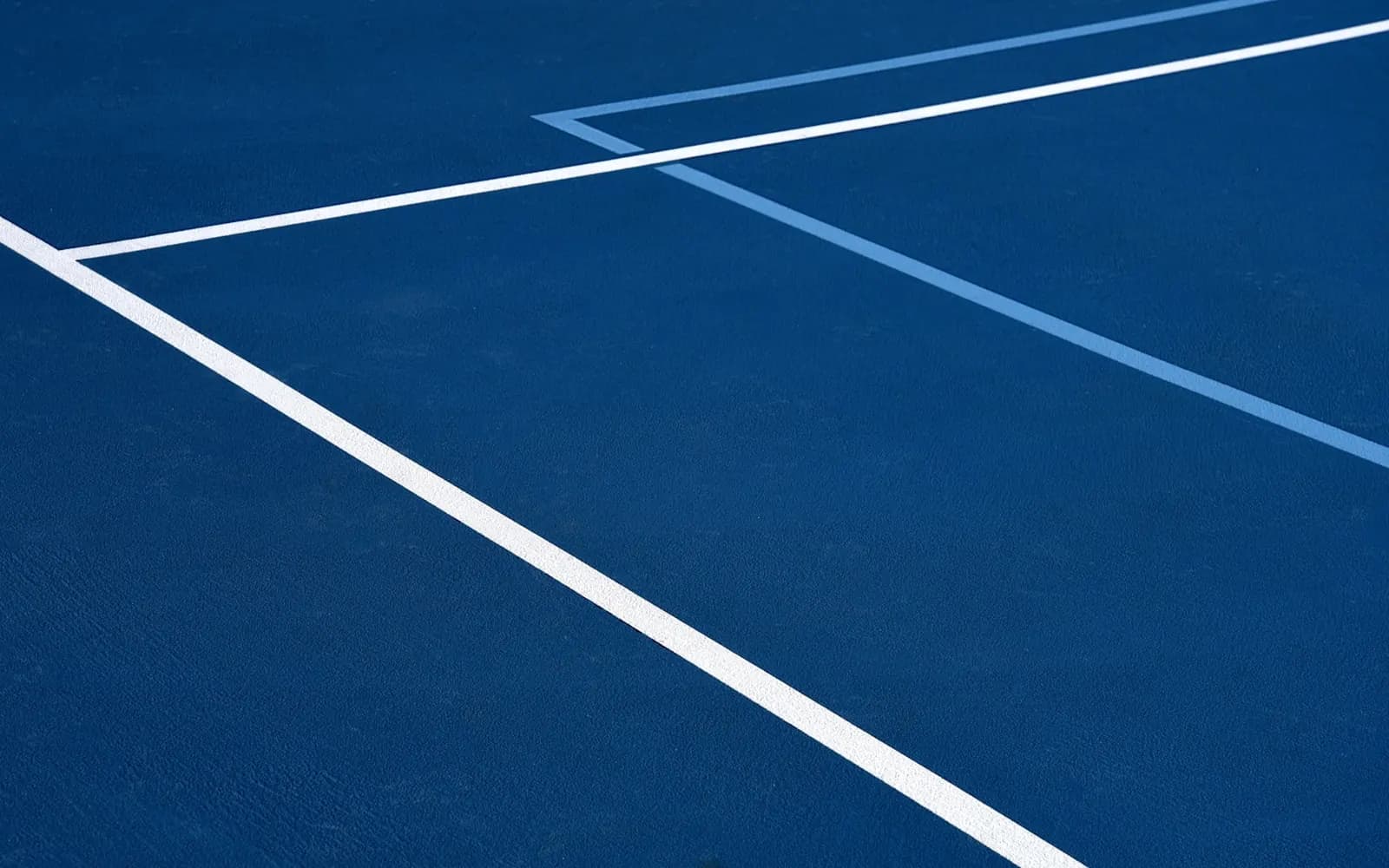
The rule in one line: you cannot hit a volley — a ball struck out of the air — while any part of you is touching the non-volley zone or its line, and your momentum cannot carry you into it after the volley either.
What you can do
You can stand in the kitchen any time the ball is not being volleyed. You can step in to play a ball that has already bounced, hit it, and step out. You can spend the whole rally in there if every ball you touch has bounced first. The zone is only "non-volley," not "no entry" — a lot of beginners avoid it entirely and lose the reach they are entitled to.
The momentum trap
The fault beginners miss: you volley a ball from just outside the line, then your follow-through or a stumble puts a foot on the line. That is a fault, even though you were legal at contact. If you volley near the kitchen, you have to land and stay outside it. Balance is everything.
The partner fault
Less obvious: if your momentum from a volley makes you bump your partner and they touch the kitchen, that is still your fault. Anything either player touches the zone with as a result of the volley counts.
The dropped-paddle and hat faults
If you volley and then drop your paddle, sunglasses or hat into the kitchen, that is a fault too — the rule covers anything you are wearing or carrying, not just your feet.
The footwork habit
Set up with your toes a few inches back from the line, weight balanced, paddle out front. Take volleys in front of your body so you are not lunging. When you do step in for a bounced ball, push back out with the same foot you led with. Drilled a few times, it becomes automatic — and your kitchen faults drop to almost none.
Why the rule exists
Without it, tall players would stand at the net and smash every ball downward. The non-volley zone forces the soft game — dinks, drops, resets — which is what makes pickleball rallies long, tactical and fun to watch.
Put it into practice on court.
Book a Court