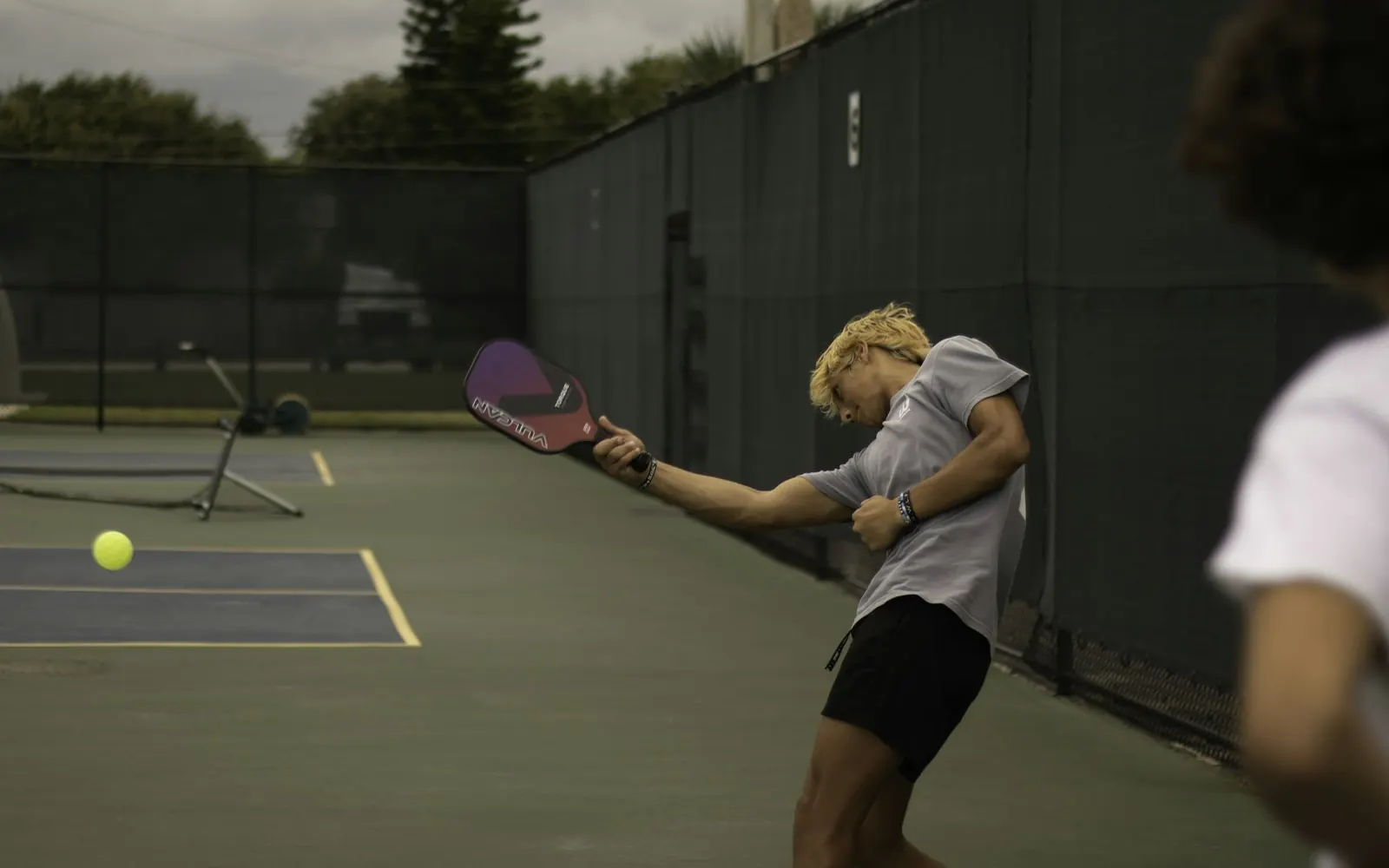
Why the return matters: in pickleball the receiving team starts with the advantage — they get to the net first while the servers are stuck at the baseline. A good return protects that advantage. A weak, short return throws it away and lets the serving team drive or drop from an easy position.
Depth over pace
The single most important quality of a return is depth. A deep return — landing in the back few feet of the court — pushes the server back, makes their third shot harder, and gives you time to get to the net. A fast but short return does the opposite: it lands at a comfortable height in the server's strike zone. If you have to choose, choose a slow deep ball over a fast shallow one every time.
Stand back
Receive from a step or two behind the baseline, not on it. It feels far, but it gives you time to read the serve, move forward into the ball, and hit through it rather than getting jammed. Moving forward as you hit also launches you toward the net.
Split-step and target
As the server contacts the ball, do a small split-step so you are balanced and can push off either way. Aim your return down the middle or deep to the server's backhand — the middle reduces angles for their third shot and can cause a moment of "yours/mine" hesitation between the servers.
Hit and move
The instant you have hit the return, run to the kitchen line. You want to be set at the net, split-stepped, before the third shot arrives. A returner who admires the shot and jogs in late gets caught in no-man's-land by a good drop.
Common errors
- Returning short because you swung too soft — commit to depth.
- Standing on the baseline and getting jammed by a deep serve.
- Going for a winner off the return — it is a rally shot, not a put-away.
- Ball-watching instead of moving to the net.
Put it into practice on court.
Book a Court