In short: serve underhand and cross-court from behind the baseline, only the serving team can score, and in doubles both partners serve before the ball goes over to the other team — except at the very start of the game.
The serve itself
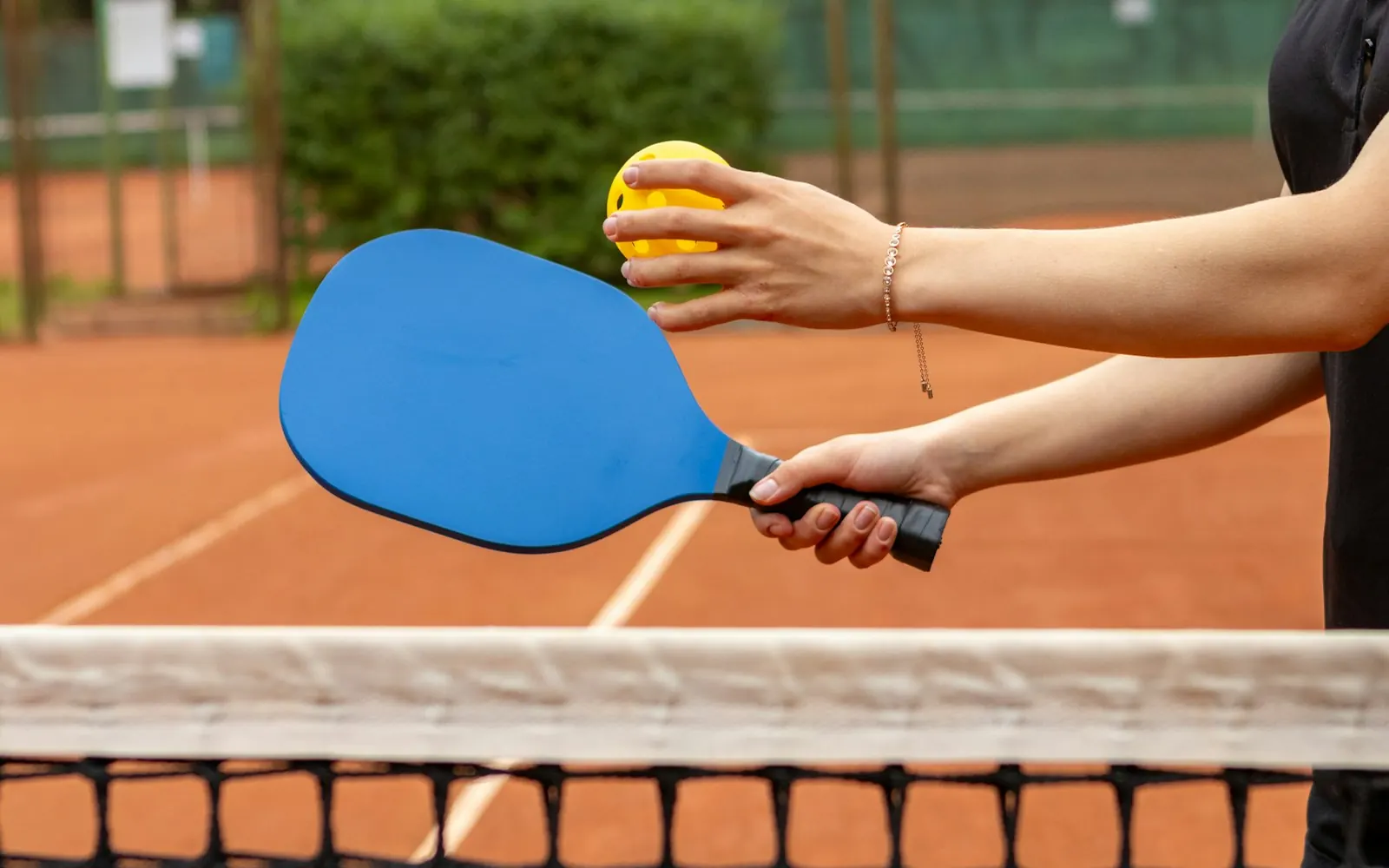
Stand behind the baseline. Contact the ball below your waist with an upward arc of the arm — no overhand motion. The serve travels diagonally into the opposite service court and must land beyond the kitchen line. You get one attempt. A serve that clips the net and still lands in is played, unlike the old let-serve. Keep it deep: a serve that lands in the back third pushes the returner back and buys your team time.
Side-out scoring
Points are only won by the serving team. If the serving team loses the rally, that is a side out — no point, and the serve passes to the opponents. Games run to 11, win by 2. Tournaments sometimes use 15 or 21, still win by 2.
The server number in doubles
Both players on a team serve before a side out. The team keeps serving — switching sides after each point won — until they lose a rally with the first server. Then the second server goes. Only after the second server also loses does the ball change teams.
The exception is the very first service turn of the game: the starting team only gets one server (announced as "second server," or 2), to reduce the first team's advantage. From the next turn on, every team gets both servers.
Calling the score
Before every serve the server calls three numbers out loud: their team's score, the opponents' score, and the server number (1 or 2). So "4–2–1" means your team has 4, the opponents have 2, and you are the first server. Singles is simpler — just two numbers, your score then theirs. Get in the habit of calling it every single serve; it prevents 90% of score arguments.
Which side do I serve from?
Server's rule of thumb: when your team's score is even, the player who started the game on the right serves from the right. When it is odd, they serve from the left. Because you switch sides only after winning a point, your position always tells you and your partner whether you have an even or odd score.
Practising it
The serve is the one shot nobody contests, so it is the easiest to groove. Book a practice bay and hit fifty serves to targets in each box. Consistent depth beats power every time.
Put it into practice on court.
Book a Court