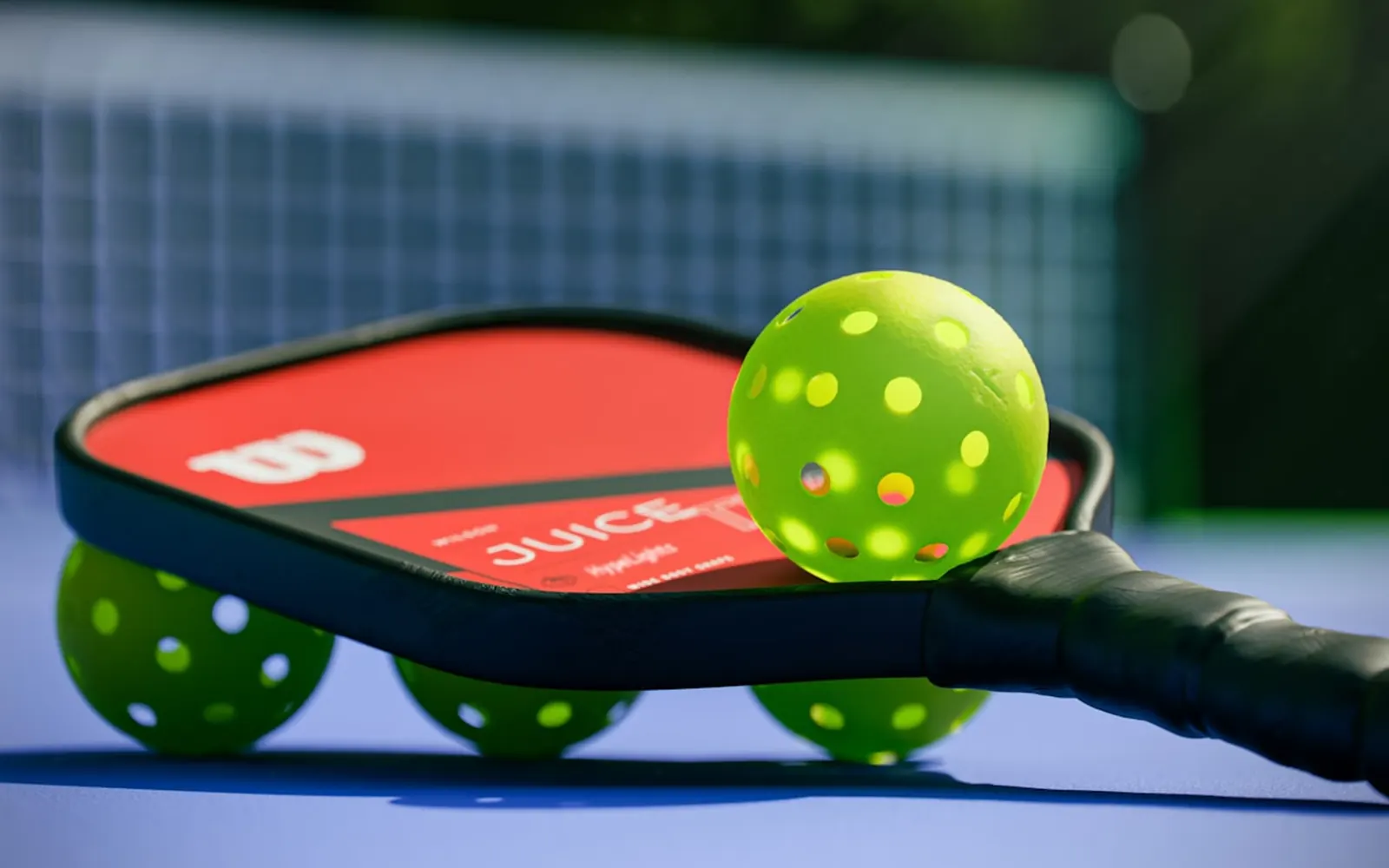
Why the third shot matters: the serving team starts a point stuck at the baseline while the returners take the net. The third shot — the serving team's first ball after the return — is their one chance to get forward. Hit it well and the point resets even. Hit it badly and you are defending until you lose it.
Drive vs drop
A drive is a hard, flat third shot. It is tempting, but against opponents already at the net it is usually blocked back at your feet before you have moved up — and now you are hitting a hard half-volley from no-man's-land. A drop is a soft arc that lands in the opponent's kitchen, unattackable, giving you time to walk to the net behind it. The drop is the higher-percentage play once you can execute it. Good players mix in a drive occasionally to keep opponents honest, but the drop is the default.
How the drop works
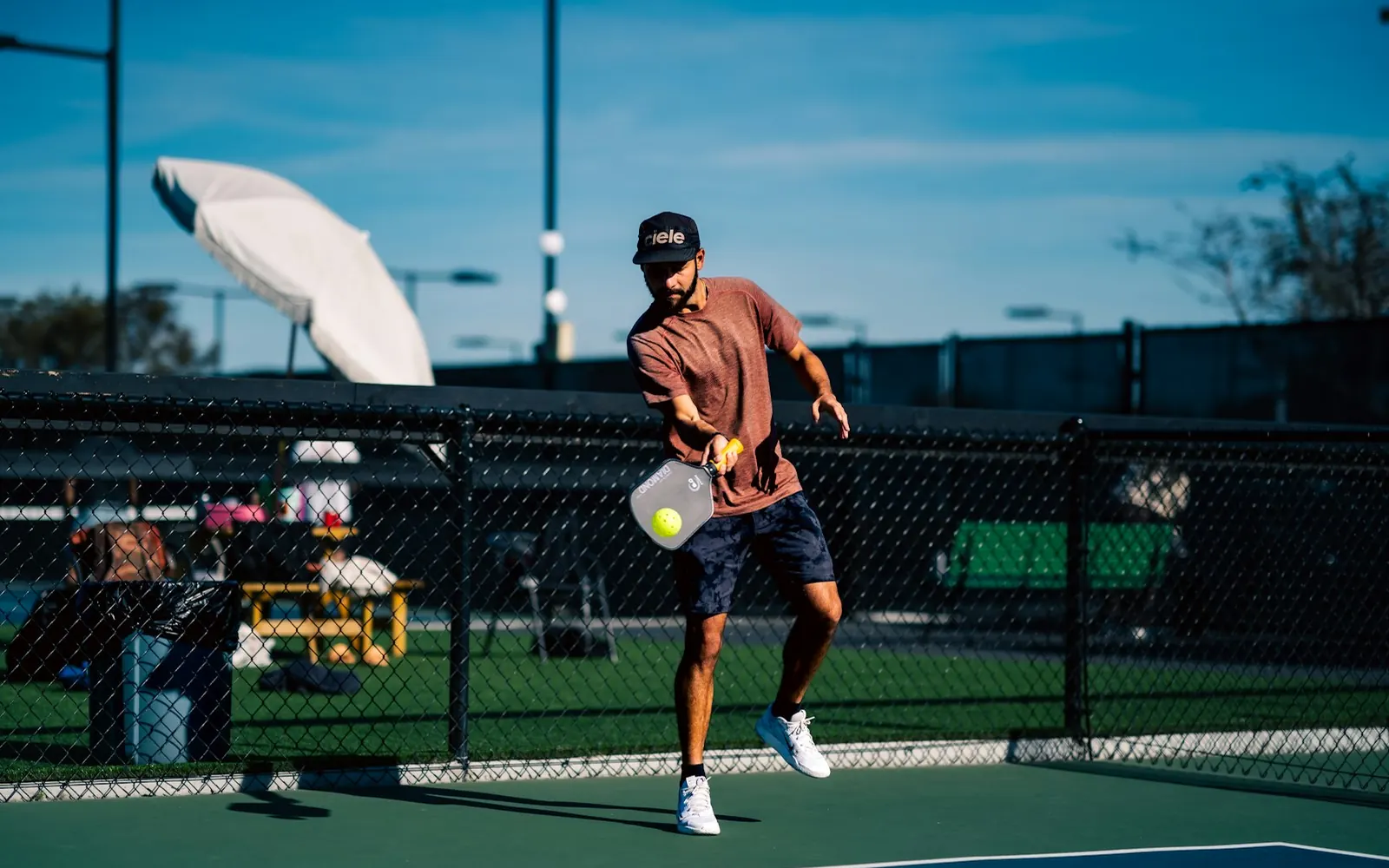
From around the baseline: low-to-high paddle path, loose grip, minimal swing — you are lifting the ball, not striking it. Contact out in front, paddle face slightly open. Aim for the arc to peak on your side of the net so the ball is descending as it crosses and drops into the kitchen. Then move forward immediately; a good drop buys you three or four steps.
Reading the height
If the return lands short and sits up, you can step in and drive or drop from higher — easier. If it lands deep at your feet, the drop is harder and you may need to hit it more like a soft lob into the kitchen. Judge each ball; do not pre-decide.
Building it in a practice bay
- Set the ball machine to feed deep to your baseline, medium pace.
- Hit twenty drops aiming for the kitchen. Track how many land soft and in.
- When you can hit seven of ten, add movement: drop, then step to the net and volley the machine's next feed.
- Finish with ten under mild fatigue — that is when the shot breaks down in a real game.
A focused practice-bay hour a week and this shot becomes reliable in about a month.
Put it into practice on court.
Book a Court