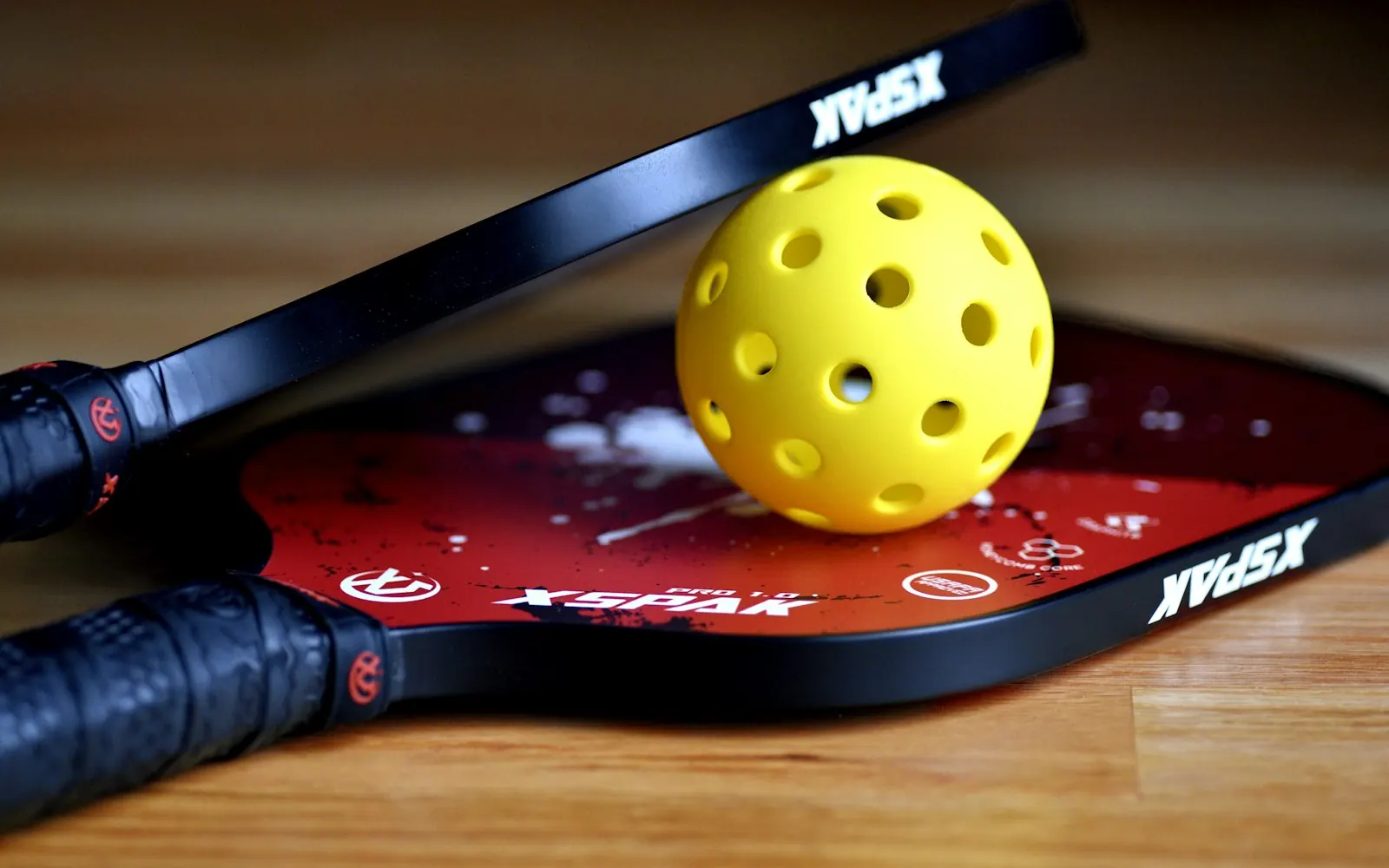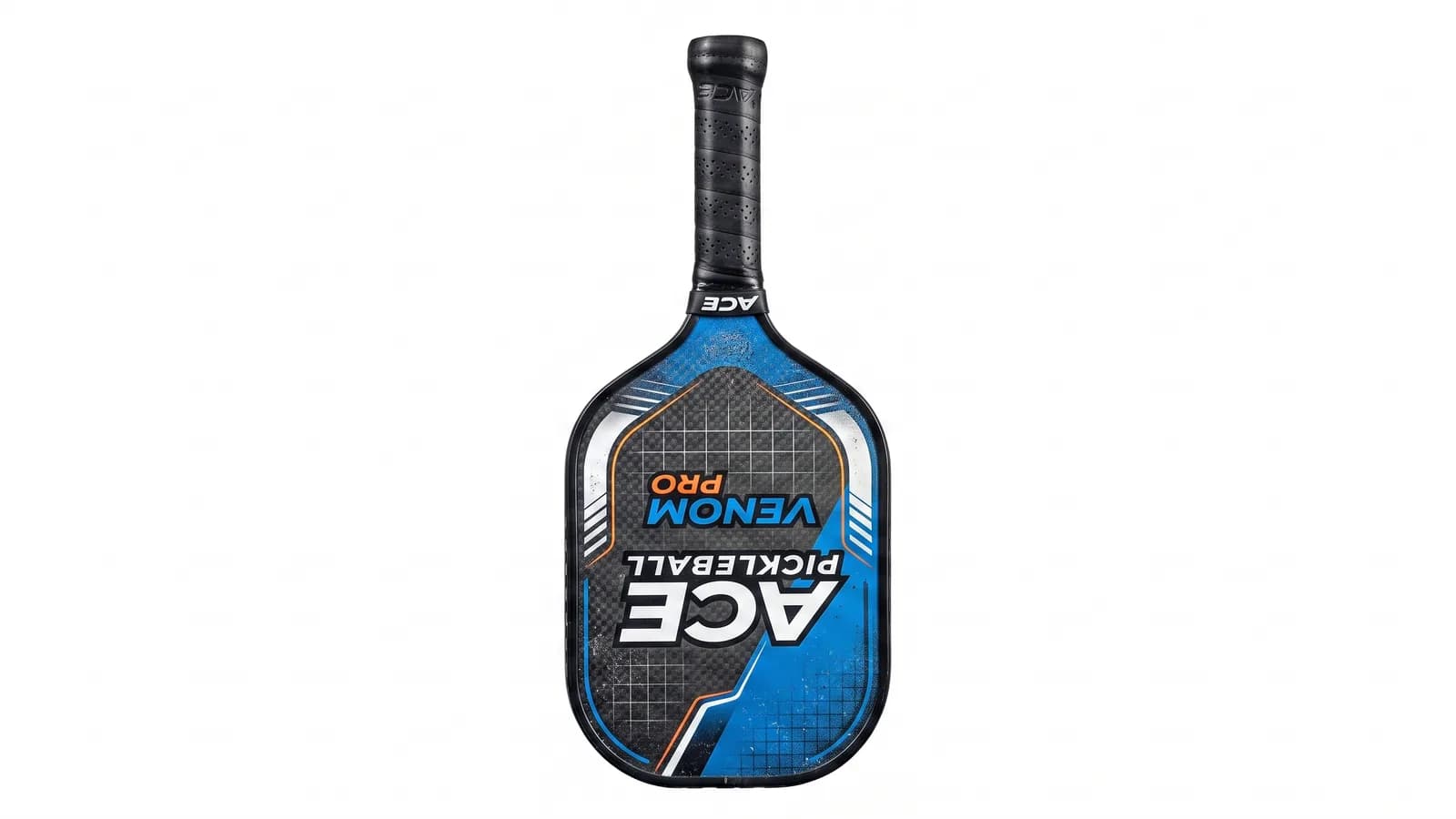
Overview: a modern pickleball paddle is a flat composite sandwich — two thin face sheets bonded to a honeycomb core, wrapped in an edge guard, on a moulded handle. Each layer has a job, and small changes in any of them change how the paddle feels.
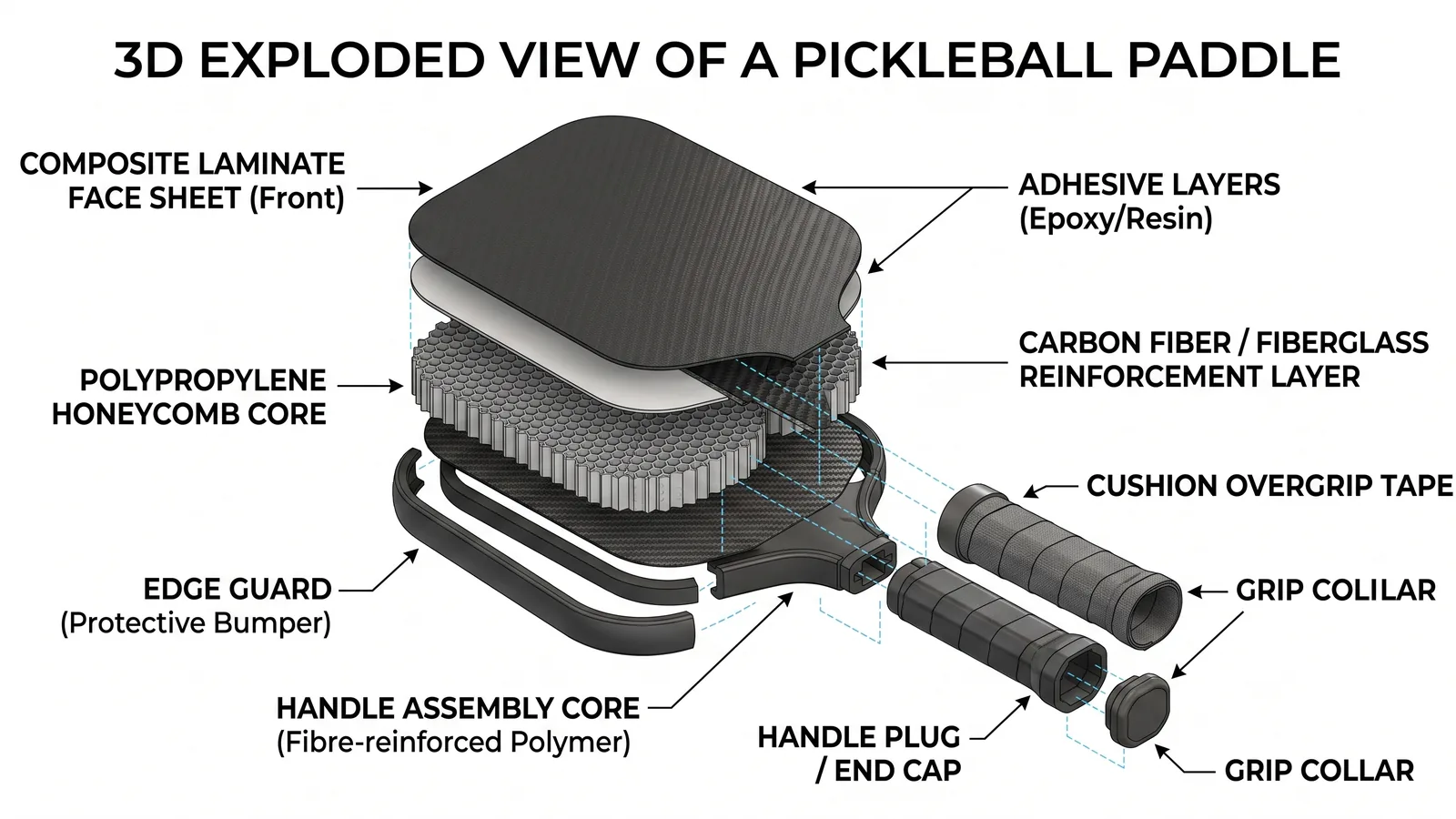
Face sheet
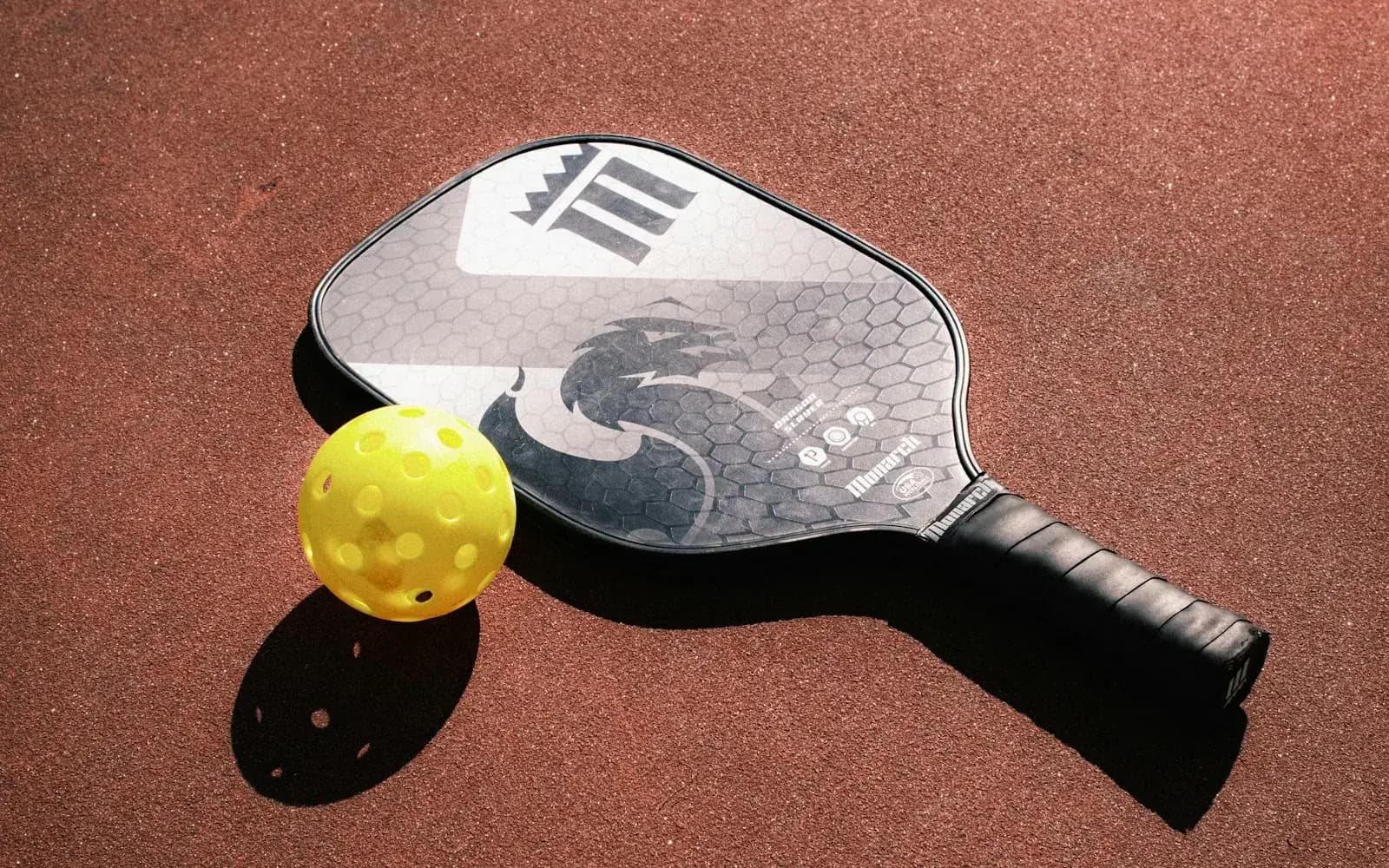
The hitting surface — a composite laminate over a carbon-fibre or fibreglass reinforcement layer. Carbon faces are stiffer and give a more consistent, control-oriented response with good spin. Fibreglass flexes more and returns a bit more pop, at the cost of a smaller effective sweet spot. The surface texture — a fine grit or a raised pattern — is what lets you brush the ball for spin.
Core
Almost always a polypropylene honeycomb. The cell size and, more importantly, the core thickness set the paddle's character: a thicker core (16 mm) is softer, more forgiving and better for control; a thinner core (13–14 mm) is firmer, hits harder, and has a smaller sweet spot that punishes off-centre contact.
Adhesive layers
Epoxy or resin bonds the face to the core. Nothing to choose here — but a delaminating paddle (a buzzing rattle or a dead spot) means this bond has failed and the paddle is finished. See care and lifespan.
Edge guard
A protective bumper around the rim that absorbs court scrapes and paddle taps. Some paddles are edgeless for a marginally larger face; most keep the guard because it dramatically extends paddle life.
Handle and grip
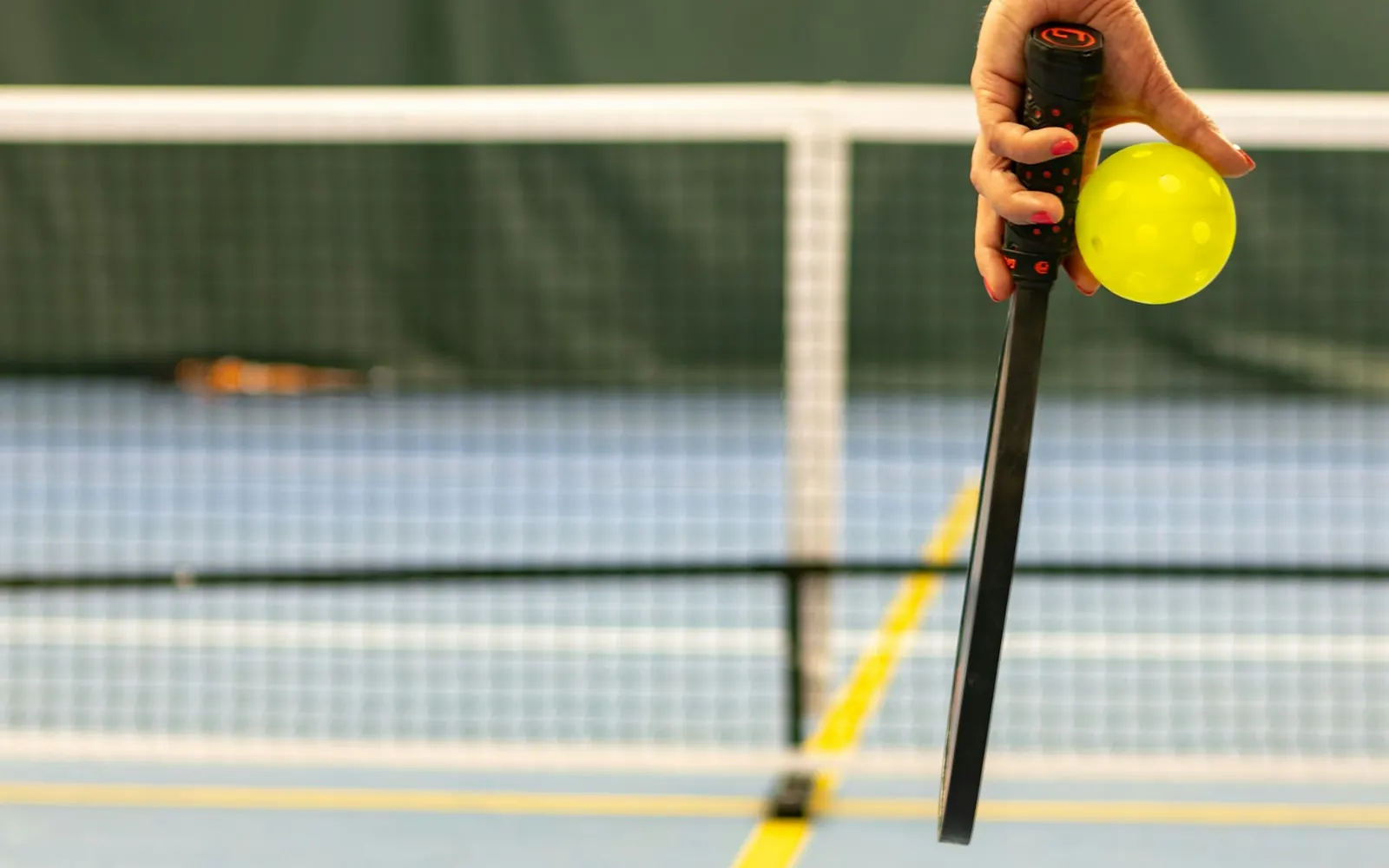
A fibre-reinforced polymer handle core, an end cap, and a cushioned overgrip. Grip circumference matters: too big and you cannot flick the paddle for quick hands at the net; too small and you squeeze too hard and lose touch. A longer handle suits two-handed backhands and players coming from tennis. Full detail in the grip guide.
Weight
Total paddle weight — typically 7.3 to 8.4 ounces — is the single biggest feel factor. It is covered in detail in the power-versus-control guide.
Shape
Wide-body paddles have a big low sweet spot and are easy to control. Elongated paddles trade sweet-spot size for reach and leverage — more power and spin, less forgiveness. Beginners should start wide-body.
Put it into practice on court.
Book a Court